Launch offer — valid today only

📄 Digital book in PDF · read it on your phone or print it

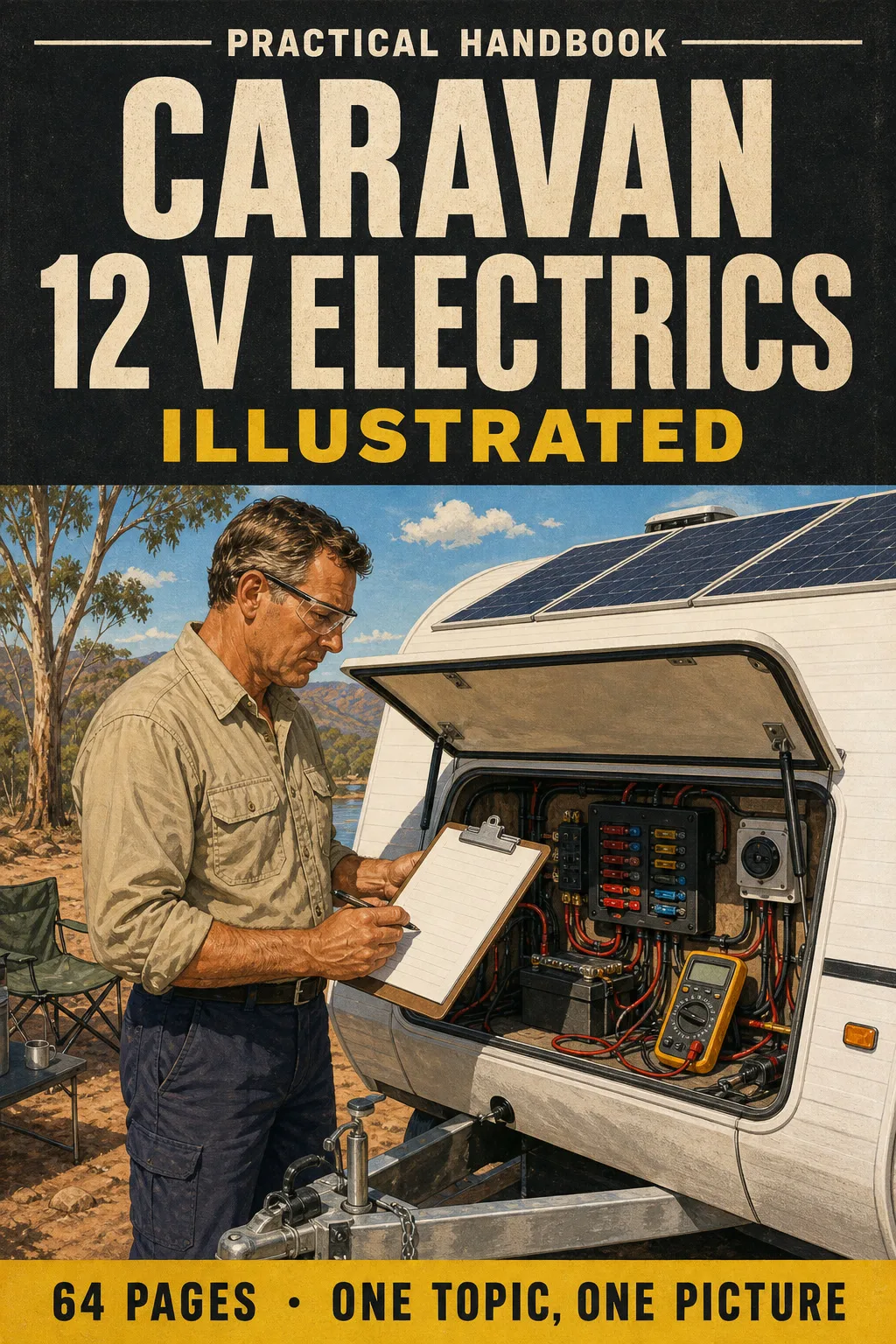
Your Caravan's 12 V System in Drawings See Why It Charges (or Doesn't), One Page per Topic

House battery, lithium and the BMS, DC-DC charging, solar and MPPT, cable sizing, voltage drop, fuses and fault-finding, written for Australian vans and conditions. Each topic has its own page: the drawing first, then the numbers you need. 64 illustrated pages.

SHOW ME MY 12 V SYSTEM, DRAWN

🔒 Secure checkout · PDF by email · 30-day guarantee

Every topic, its own pageEvery part of the system drawn, with the explanation beside it
64 illustrated pages8 parts, from the block diagram to your system on one page
Up-to-date sourcesAS/NZS 3001.2, AS/NZS 3008.1.1 and manufacturer data sheets
PDF by emailFormat

Look Inside the Book

Every page has one big drawing and a box with the numbers you need to know:

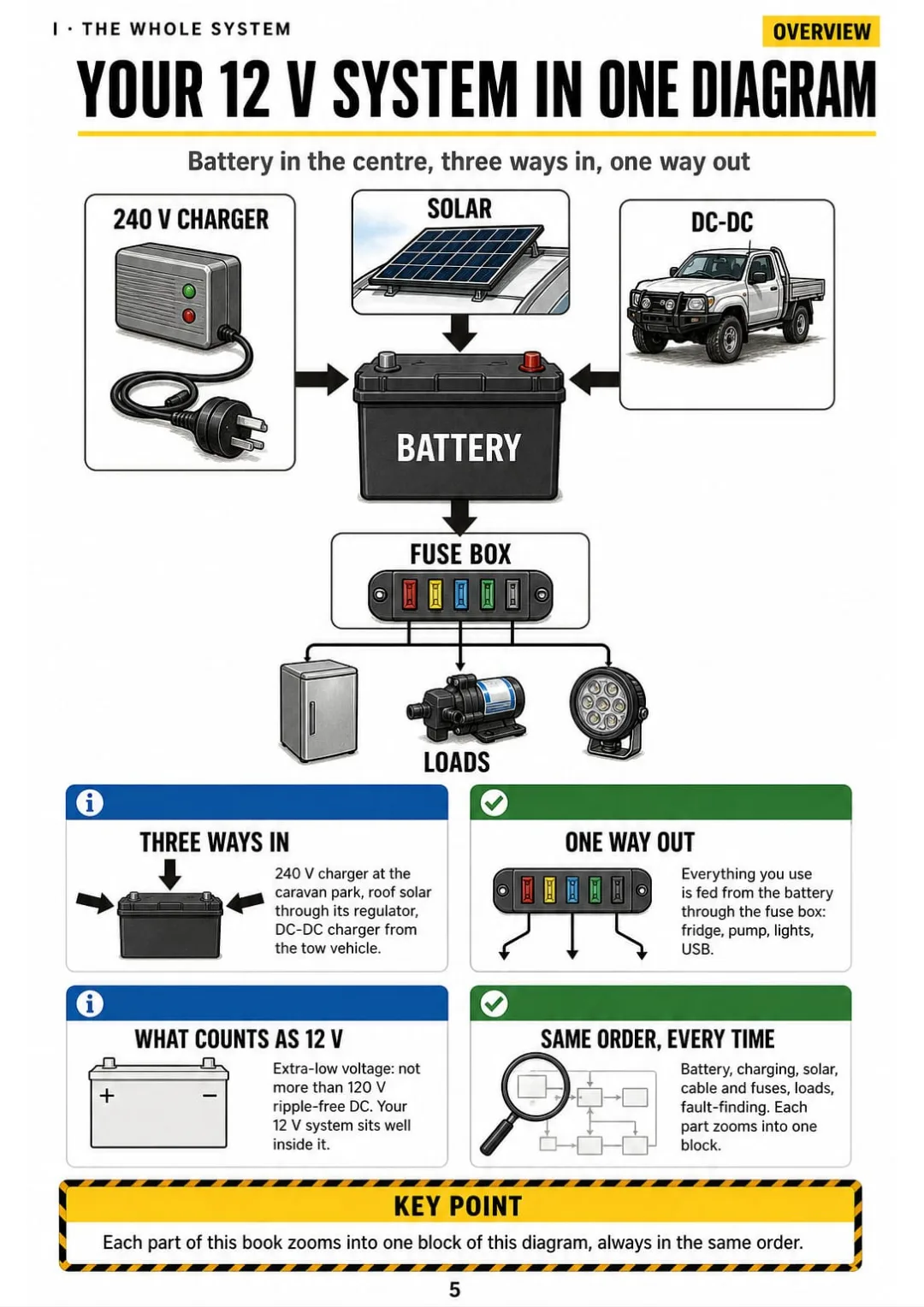
Battery in the centre: 240 V charger, solar and DC-DC in, fuse box out to the loads.
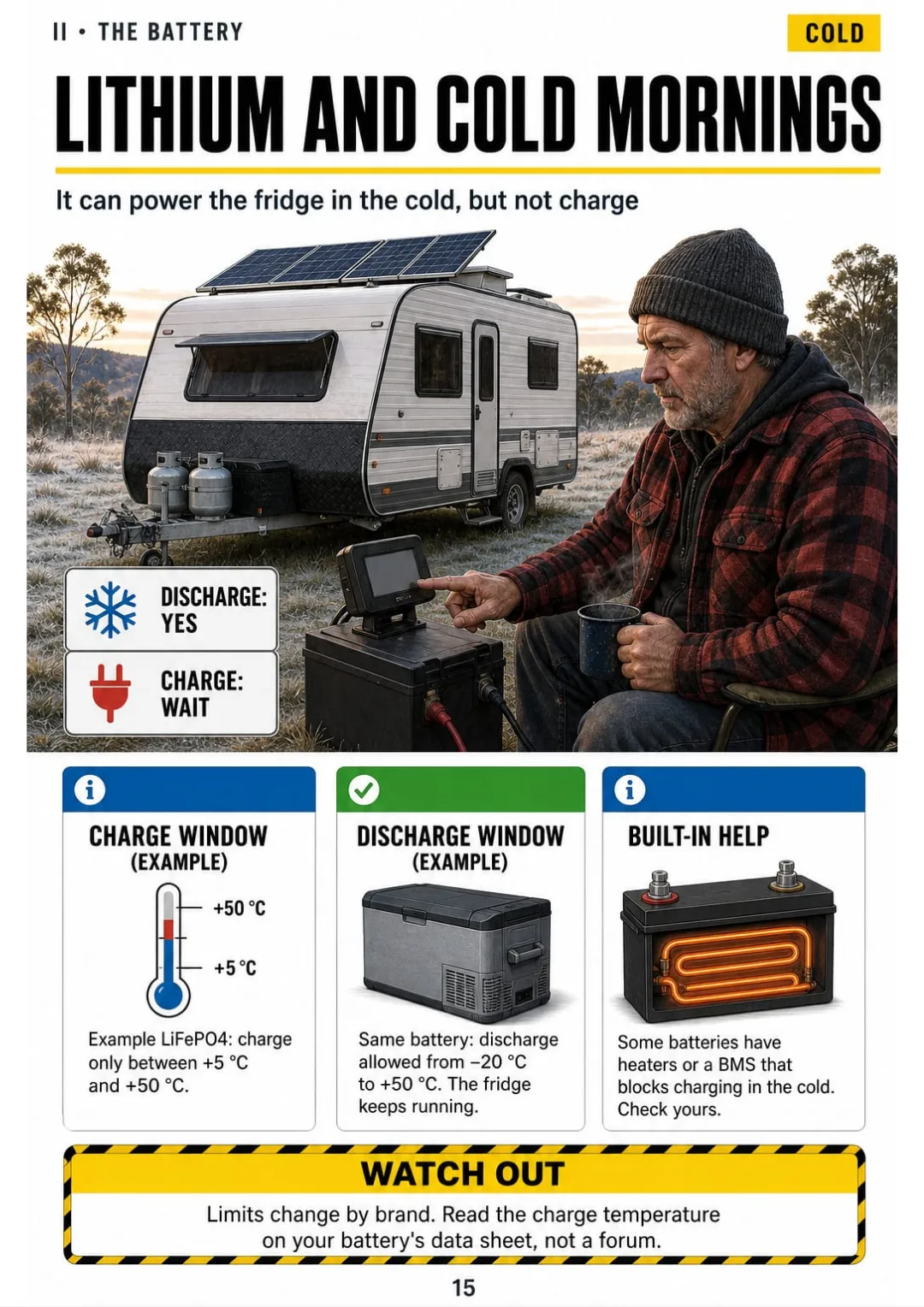
Example LiFePO4: charge +5 to +50 °C, discharge −20 to +50 °C
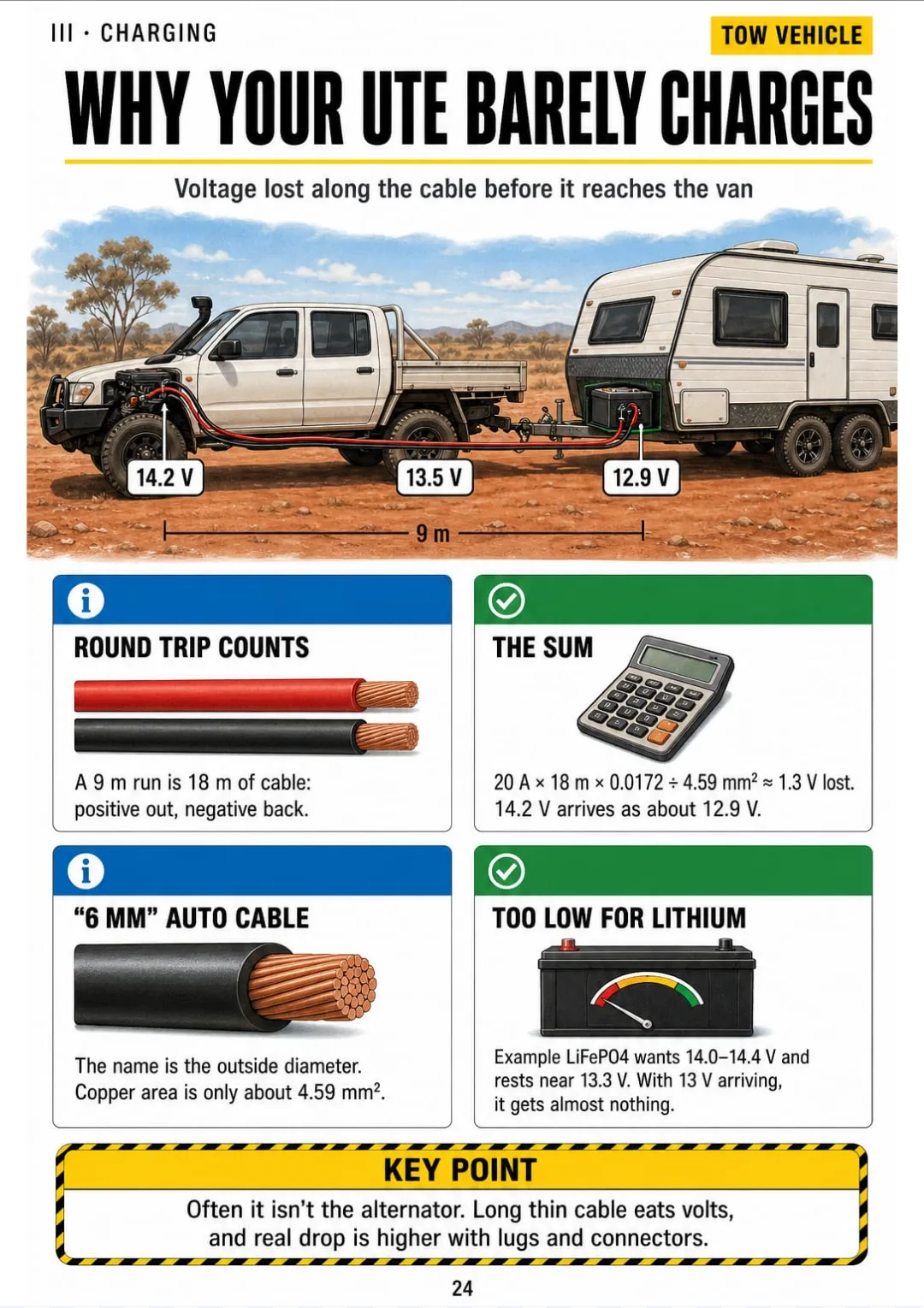
9 m of "6 mm" auto cable at 20 A: about 1.3 V lost before the van battery.
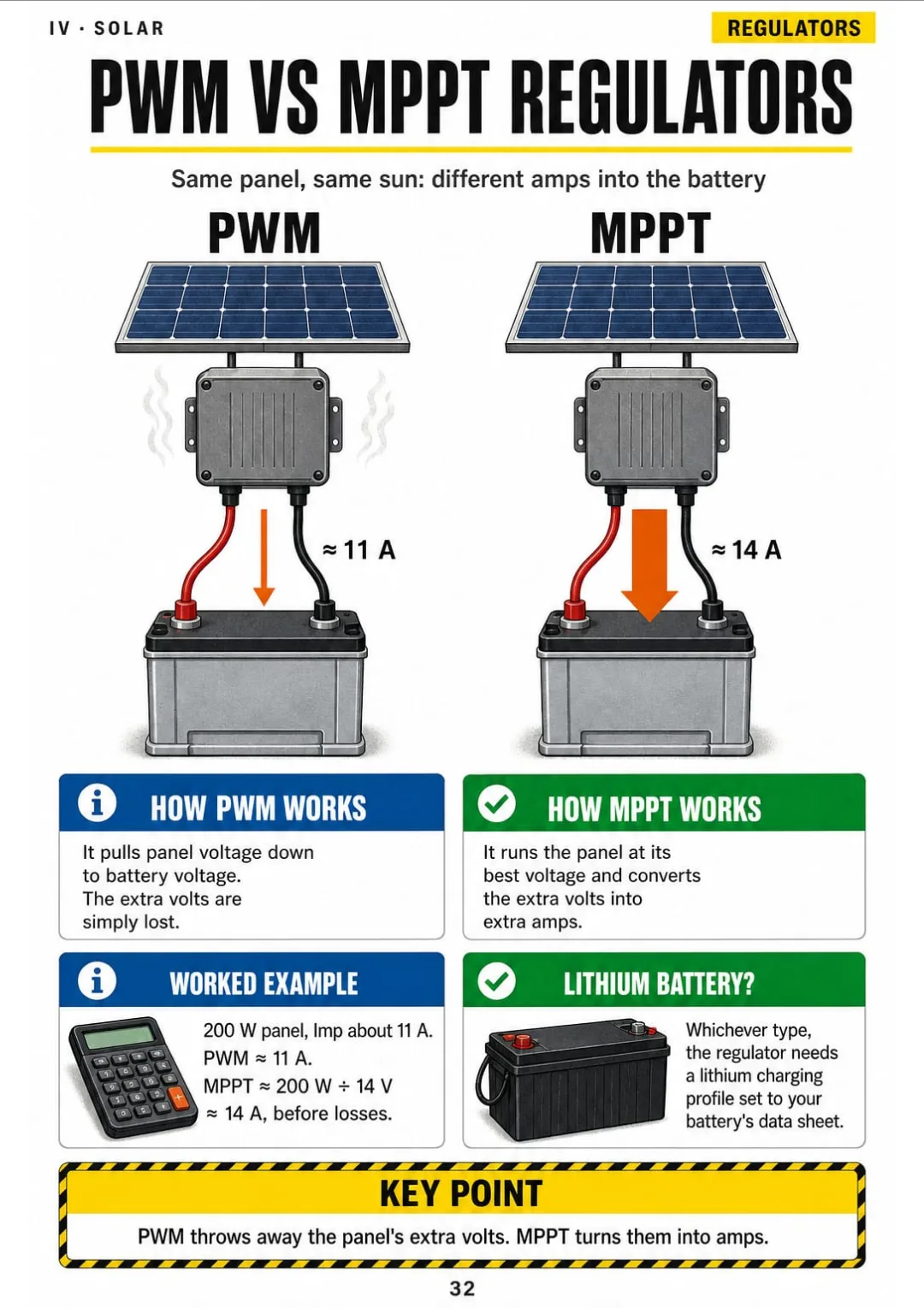
200 W panel: PWM ≈ 11 A, MPPT ≈ 14 A into the battery
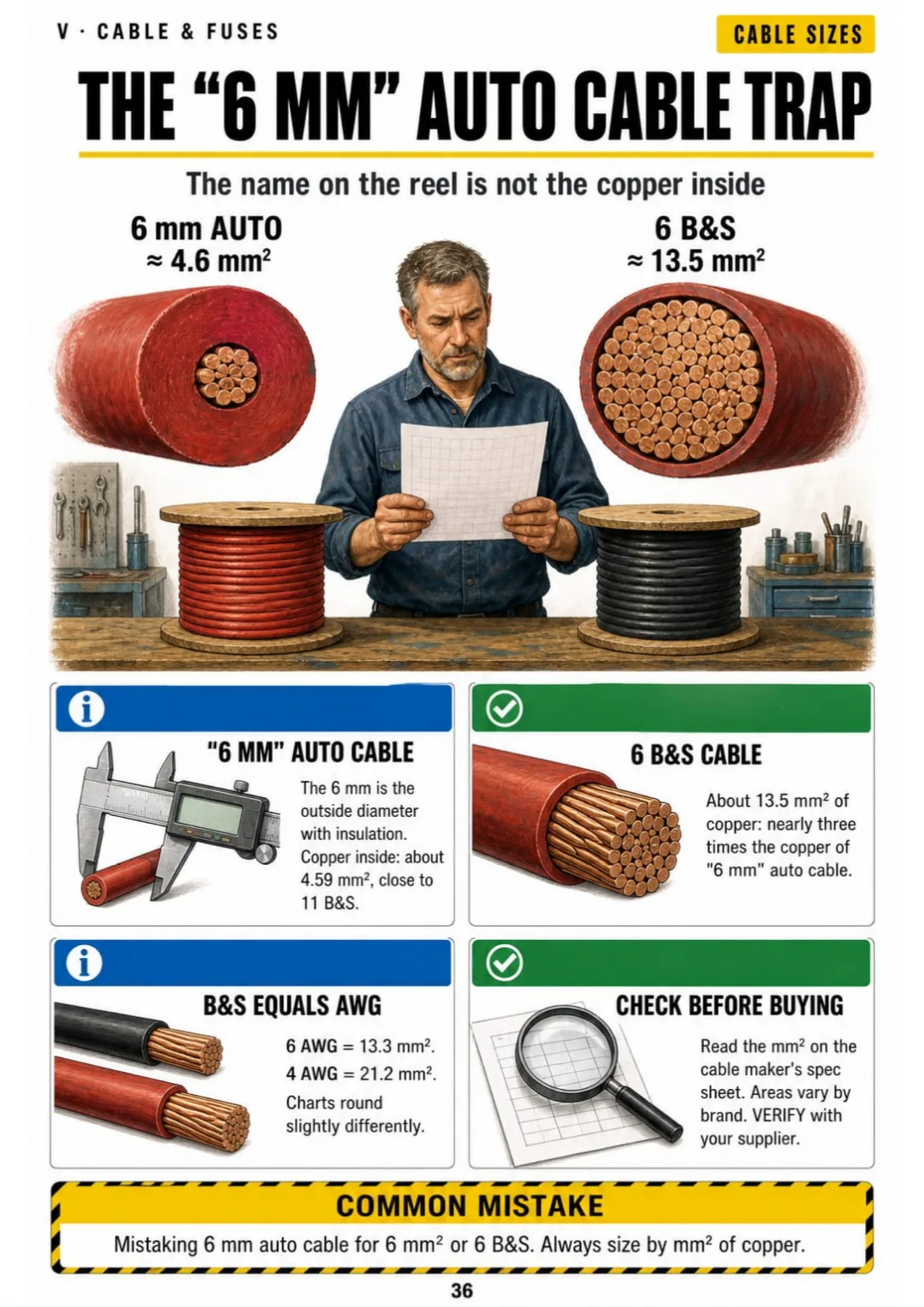
"6 mm" auto cable ≈ 4.6 mm² of copper; 6 B&S ≈ 13.5 mm².
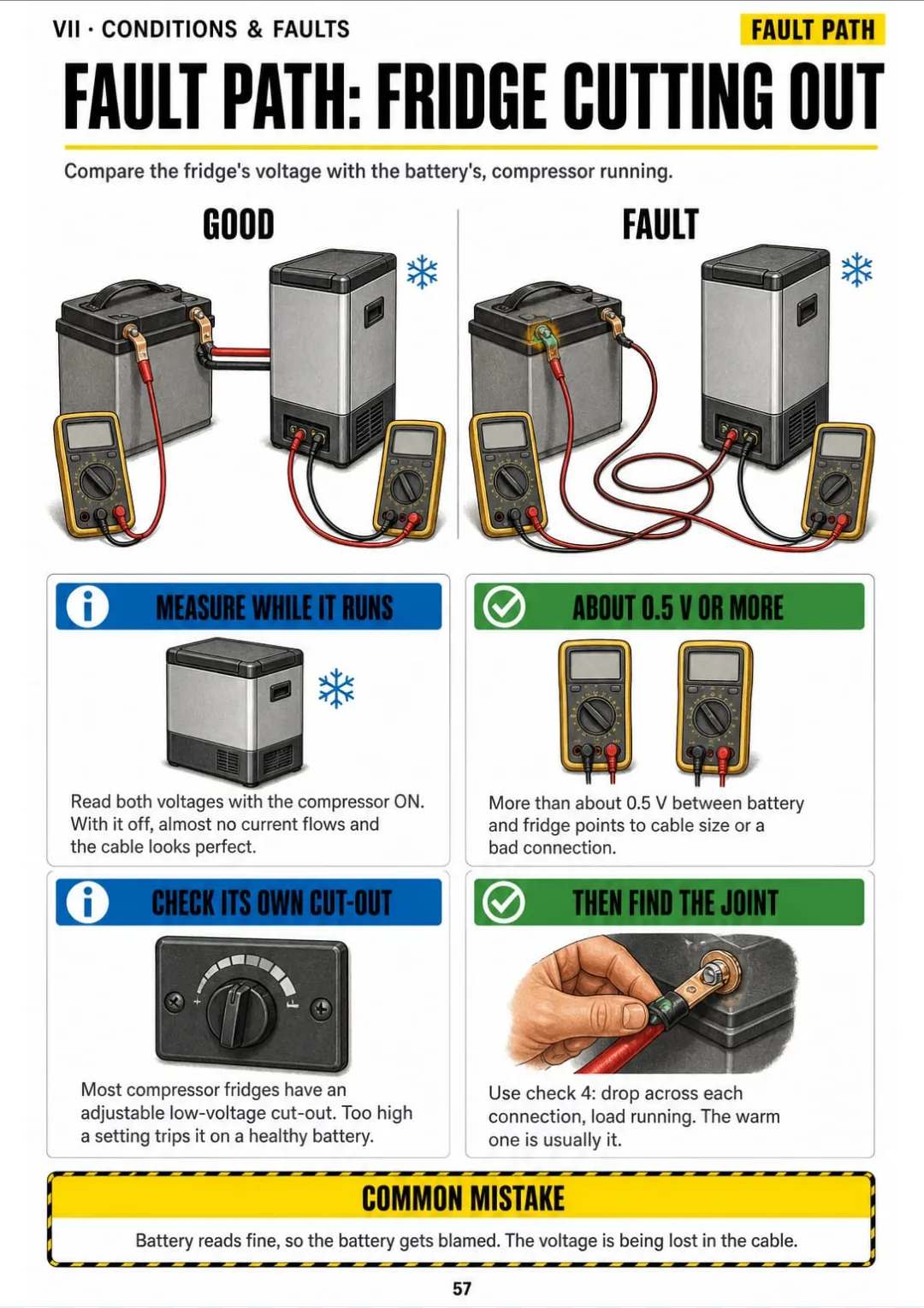
About 0.5 V more between battery and fridge, compressor running: cable or connection.
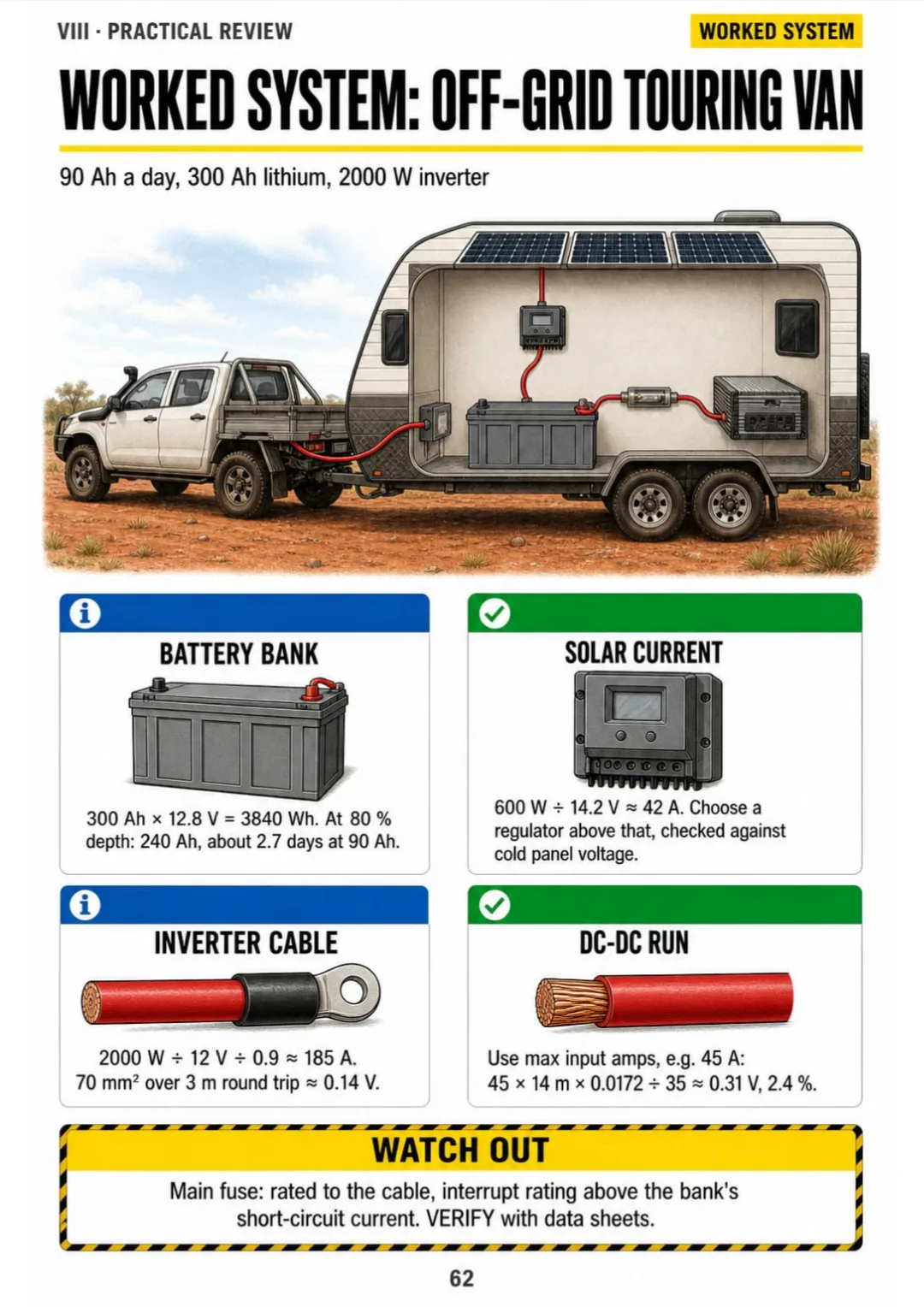
2000 W inverter ≈ 185 A from 12 V with losses: 70 mm² cable
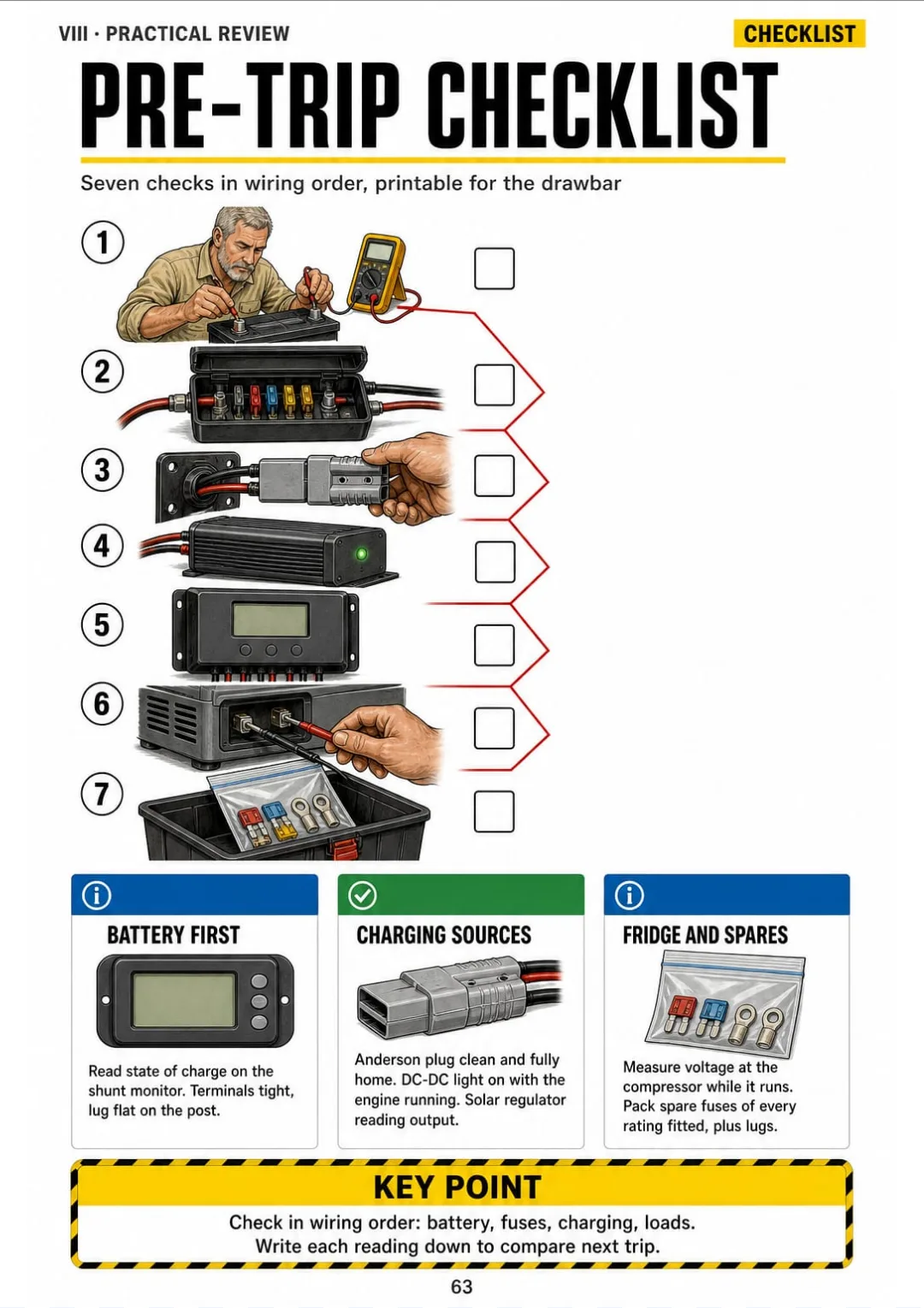
Battery → fuses → Anderson → DC-DC → solar → fridge → spares

Swipe to see more →

These are real pages from the book. The table of contents is the full one: 8 parts and 60 topics.

The Problem Isn't You. It's How It Was Explained to You.

You've towed for four hours with the van plugged into the ute, and the battery monitor says the van has barely charged. The engine ran all day. So where did the charge go?

One forum says alternator, another says cable, a third says just buy a DC-DC. The manual explains it in paragraphs about resistance and conductor tables. You read it all, and the ute still doesn't charge the van.

9 m of "6 mm" auto cable at 20 A: about 1.3 V lost before the van battery.

In the book it's one page: the ute, nine metres of "6 mm" auto cable, the van battery. A big arrow shows about 1.3 V lost along the way at 20 A, and why the van battery never sees enough voltage to fill up.

The same goes for the rest: the DC-DC charger, PWM vs MPPT, the "6 mm" cable trap, the fuse box and the fault path when the van won't charge. Each one has its own page.

You see why it happens, you pick the right cable and you wire it up without going back to the forums.

COMPARE FOR YOURSELF

Same Topic, Two Ways to Learn It

THIS
  • The manual: line after line
  • Cells, BMS and voltages explained only in words
  • You start the install still unsure
A lithium iron phosphate (LiFePO4) battery with a nominal voltage of 12.8 V consists of four cells connected in series, each with a nominal voltage of 3.2 V. Owing to the electrochemical characteristics of this chemistry, individual cell voltages may diverge over successive charge and discharge cycles, necessitating continuous supervision by an integrated battery management system, which monitors cell voltage, temperature and current, performs balancing, and disconnects the battery whenever operating parameters exceed the limits specified by the manufacturer, including low-temperature charge inhibition.
FOR THIS
  • The lithium battery in one drawing
  • The cell voltages in a box
  • You see it and it makes sense
Example LiFePO4: charge +5 to +50 °C, discharge −20 to +50 °C
CONTENTS

Take a Look at the 8 Parts and 60 Topics

The whole system, the battery, charging from 240 V and the tow vehicle, solar, cable and fuses, loads and the inverter, Australian conditions and fault-finding, and a practical review: 64 pages, all illustrated.

IThe Whole System at a Glance · pp. 5-11
  1. Your Caravan's 12 V System in One Block Diagram
  2. Where 12 V Ends and 240 V Begins
  3. Volts, Amps and Watts with a Garden Hose
  4. Amp-Hours and Watt-Hours: The Fuel in the Tank
  5. Why 12 V Needs Thick Cable
  6. The Negative Side Matters as Much as the Positive
  7. Reading the Labels on Your Gear
IIThe Battery · pp. 12-20
  1. AGM vs Lithium (LiFePO4) Side by Side
  2. Why a 100 Ah AGM Is Really a 50 Ah Battery
  3. Inside a Lithium Battery: Cells and the BMS
  4. Lithium and Cold Mornings
  5. Reading State of Charge from Voltage
  6. The Battery Monitor and Its Shunt
  7. Sizing Your Battery from Your Daily Use
  8. Two Batteries: Parallel, Series and Never Mixing
  9. Mounting the Battery Safely
IIICharging from 240 V and the Tow Vehicle · pp. 21-27
  1. The Three Charging Stages
  2. Charge Voltages by Battery Type
  3. The 240 V Battery Charger at the Caravan Park
  4. Why Your Ute Barely Charges the Van
  5. How a DC-DC Charger Fixes It
  6. Smart Alternators and the Ignition Wire
  7. The Anderson Plug Between Car and Van
IVSolar · pp. 28-35
  1. What a Panel Really Makes in Australian Sun
  2. Peak Sun Hours by Region and Season
  3. Roof Panels vs Portable Blankets
  4. Series or Parallel Panels
  5. PWM vs MPPT Regulators
  6. Sizing the Solar Regulator
  7. DC-DC with Built-In MPPT
  8. Solar Wiring and Protection
VCable, Fuses and Connections · pp. 36-45
  1. B&S, mm² and the "6 mm" Auto Cable Trap
  2. Voltage Drop: The Formula in One Line
  3. Worked Example: DC-DC Cable from Ute to Van
  4. How Much Drop Is Acceptable
  5. Current Rating: Cable That Won't Overheat
  6. What a Fuse Really Protects
  7. Fuse and Breaker Types
  8. The Fuse Box and Bus Bars
  9. Crimping a Lug the Right Way
  10. Routing Cable Through a Moving Van
VILoads and the Inverter · pp. 46-51
  1. Your Daily Amp-Hour Budget
  2. The Compressor Fridge: Your Biggest Load
  3. Water Pump, Lights and USB Outlets
  4. Inverters: What 12 V Really Costs to Make 240 V
  5. Inverter and 240 V Outlets: Electrician Territory
  6. Low-Voltage Cut-Offs and Load Priorities
VIIAustralian Conditions and Fault-Finding · pp. 52-57
  1. Heat: Batteries, Regulators and the Boot Compartment
  2. Dust and Water
  3. Corrugations: Checking What Shook Loose
  4. The Multimeter: Four Checks You Need
  5. Fault Path: Battery Not Charging from the Car
  6. Fault Path: Fridge Cutting Out
VIIIPractical Review · pp. 58-64
  1. The 15 Most Frequent Mistakes (1-5)
  2. The 15 Most Frequent Mistakes (6-10)
  3. The 15 Most Frequent Mistakes (11-15)
  4. Full Worked System: Weekend Van
  5. Full Worked System: Off-Grid Touring Van
  6. Pre-Trip Checklist
  7. Your System on One Page

One Page, One Topic, All Clear

Think of it this way:

You're at a free camp out past Longreach, it's the second night and the fridge has just cut out. You need to know whether it's the battery, the cable or the low-voltage cut-off.

You open the book at the fridge fault path and see the checks drawn in order, from the battery terminals to the fridge plug, with the reading you should get at each point.

"6 mm" auto cable ≈ 4.6 mm² of copper; 6 B&S ≈ 13.5 mm².

Same with the DC-DC charger, the solar regulator, cable sizing, fuses and lithium charge voltages: each one on its own page.

Caravan 12 V Electrics Illustrated is 8 parts and 60 topics, all drawn, with the 15 most frequent mistakes, two fully worked systems and a pre-trip checklist at the end.

What you see drawn, you don't have to memorize.

What's Inside Caravan 12 V Electrics Illustrated:

Ipp. 5-11

The Whole System at a Glance

The block diagram of the whole system, where 12 V ends and 240 V begins, volts, amps and watts, amp-hours, why 12 V needs thick cable and how to read the labels on your gear.

IIpp. 12-20

The Battery

AGM vs lithium, why a 100 Ah AGM gives you about half, cells and the BMS, cold mornings, state of charge, the battery monitor, sizing, two batteries and safe mounting.

IIIpp. 21-27

Charging from 240 V and the Tow Vehicle

You find out why the ute barely charges the van, and what fixes it: the three charging stages, charge voltages by battery type, the 240 V charger at the park, the DC-DC, smart alternators and the plug between car and van.

IVpp. 28-35

Solar

What a panel really makes in Australian sun, peak sun hours by region, roof vs blankets, series or parallel, PWM vs MPPT, sizing the regulator and solar protection.

Vpp. 36-45

Cable, Fuses and Connections

B&S vs mm², voltage drop in one line, a worked ute-to-van cable run, acceptable drop, current rating, fuses, breakers, the fuse box, crimping lugs and routing cable.

VIpp. 46-51

Loads and the Inverter

Your daily amp-hour budget, the compressor fridge, pump, lights and USB, what an inverter draws from 12 V, where the electrician takes over and low-voltage cut-offs.

VIIpp. 52-57

Australian Conditions and Fault-Finding

Heat, dust and water, corrugations, four multimeter checks and two fault paths: not charging from the car and the fridge cutting out.

VIIIpp. 58-64

Practical Review

The 15 most frequent mistakes, a weekend van and an off-grid tourer worked from start to finish, the pre-trip checklist and your system on one page.

At the end of the book: The 15 most frequent mistakes, two fully worked systems, a pre-trip checklist and your system on one page.
Plus: 2 Free Books

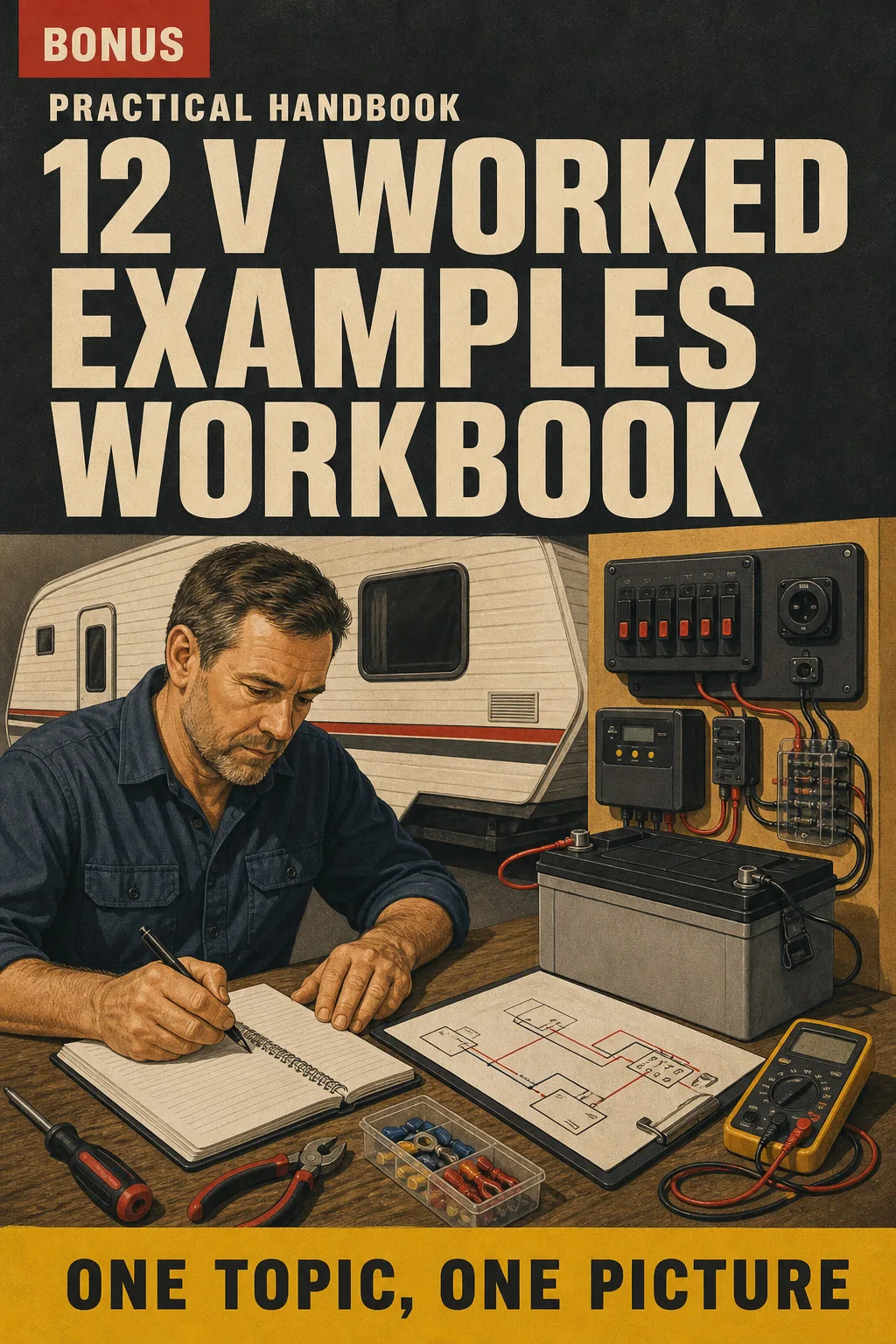
12 V Worked Examples Workbook

BONUS 1: «12 V Worked Examples Workbook»

Value on its own: US$ 17.90

Practise every calculation on your own van: amp-hour budget, battery and solar sizing, regulator choice and cable size, each with a blank worksheet and a fully worked answer to check against.

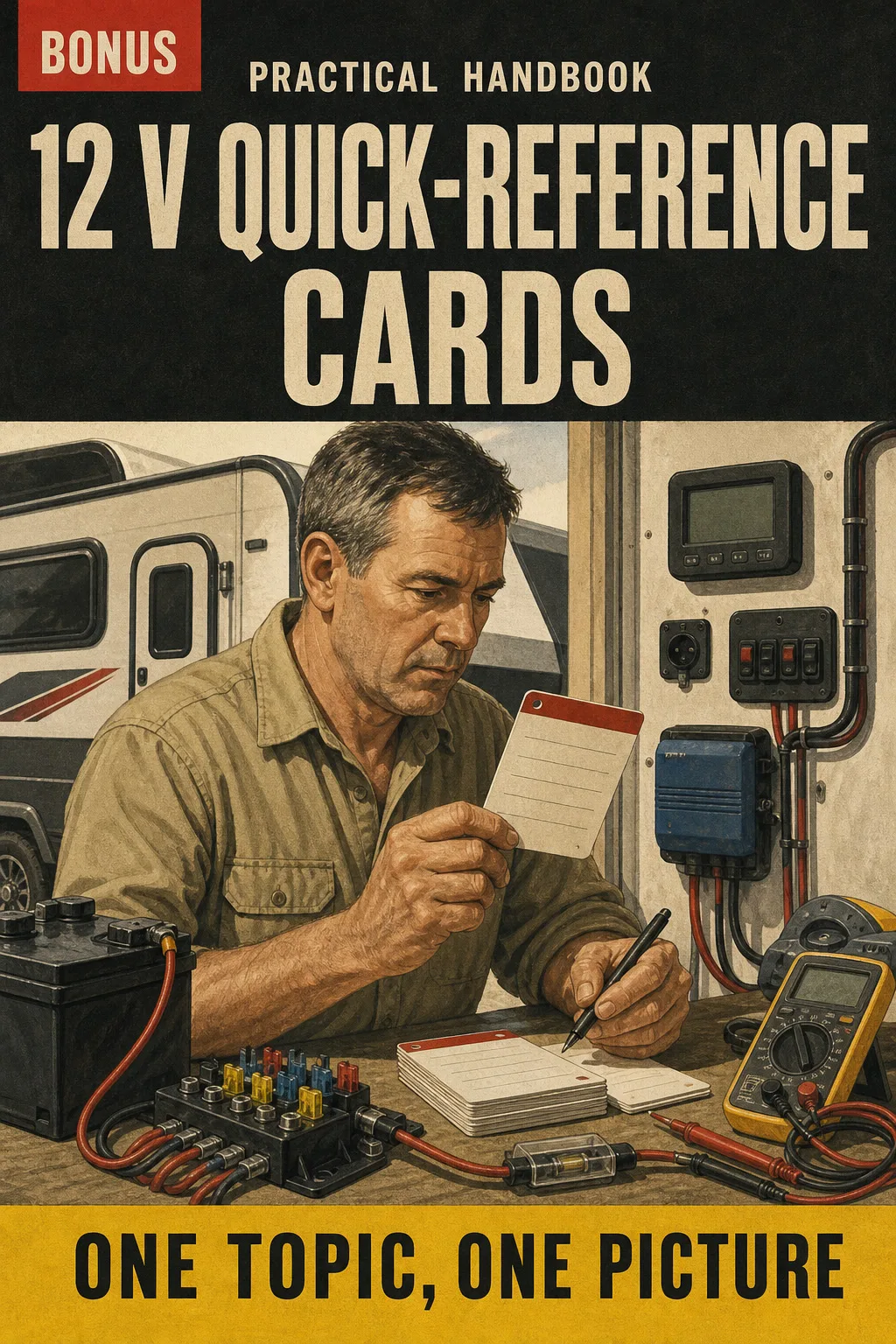
12 V Quick-Reference Cards

BONUS 2: «12 V Quick-Reference Cards»

Value on its own: US$ 14.90

Printable cards to keep in the van: the wiring order, crimping steps, fuse placement and simple multimeter checks, so you're not scrolling forums when something stops working on the road.

Caravan 12 V Electrics Illustrated with 2 Free Books

  • Caravan 12 V Electrics Illustrated: 64 illustrated pagesUS$ 63
  • BONUS 1: 12 V Worked Examples WorkbookUS$ 17.90
  • BONUS 2: 12 V Quick-Reference CardsUS$ 14.90
  • High-resolution PDF to printIncluded
Total value US$ 95.80
YOUR PRICE:
US$ 27
You save US$ 68.80
YES, I WANT CARAVAN 12 V ELECTRICS ILLUSTRATED FOR US$ 27

📄 This is a digital PDF book sent to your email: nothing is printed or shipped.

Secure purchaseEncrypted payment30-day guarantee

PDF by email: We email you Caravan 12 V Electrics Illustrated as a PDF, together with the two free books. It's a single payment: no installments, no extra charges.

Who This Book Is For

You're planning your 12 V setup

You're planning your 12 V setup

You see how battery, chargers, solar and fuses fit together before you buy anything, and you size each part with your own numbers.

The big trip is coming up

The big trip is coming up

You check the system in the same order as the pre-trip checklist and take the printed pages with you in the van.

Your system is already in the van

Your system is already in the van

When the battery is flat or the fridge cuts out, you follow the fault path page by page instead of guessing.

Everything You Get Today

US$ 95.80US$ 27
YES, I WANT CARAVAN 12 V ELECTRICS ILLUSTRATED FOR US$ 27

📄 This is a digital PDF book sent to your email: nothing is printed or shipped.

30DAYS
GUARANTEE

30-Day Guarantee

Try Caravan 12 V Electrics Illustrated for 30 days, bonus books included.

We refund everything if the file won't open, if the book isn't what you see here, if you were charged twice or if the email doesn't arrive. Just email us.

You pay once. No subscriptions.

Frequently Asked Questions

Is it for me if I've already swapped a battery or fitted a panel?

Yes. It's not a beginner's book that stops at 'what is a volt'. It starts with the whole system in one diagram and goes on to cable sizing, voltage drop, DC-DC with lithium and two fault paths, with worked examples in metric units. What YouTube doesn't give you: the same order on every page and all the numbers in one place, ready to print and keep in the van.

Where does the content come from?

From AS/NZS 3001.2, AS/NZS 3008.1.1, AS/NZS 5033 as a reference for solar wiring, and the data sheets of battery, charger, regulator and fridge manufacturers. Every figure is marked to check against the current edition and your gear's data.

Is it official material?

No. It's an independent illustrated book. Standards and regulators are named only to say what the content is based on, with no affiliation or endorsement.

Does it replace a licensed electrician or a course?

No. It covers 12 V DC only. All 240 V work, including inverter outlets and mains hook-up, must be done by a licensed electrician, and the rules vary by state and territory.

Does it suit my van and Australian conditions?

It's written for caravans, camper trailers and campervans in Australia: B&S and mm², peak sun hours by region, heat, dust and corrugations. The worked examples are written for this book; check every figure against your own gear's data sheets.

When and how does it arrive?

The book and the 2 bonus books arrive as a PDF by email, at the address you enter at checkout. Save the files to your phone or tablet before you leave and they open without reception.

Do I have to pay every month?

No. It's a one-off payment.

Can I have it on paper?

We don't post a printed copy: it's a PDF ready to print. Print the pages you need, like the fault paths and the pre-trip checklist, and keep them in the van.

How does the refund work?

You have 30 days. We refund everything if the file won't open, if the book isn't what you see on this page, if you were charged twice or if the email doesn't arrive: just email us.

Before You Close This Page

No more forum threads that contradict each other.

The DC-DC cable run, drawn so you get it first time.

You head off on the trip knowing where every cable and fuse goes.

Drawings make studying faster.

The book is right below.

One-time payment: US$ 27 · Guarantee: 30 days · PDF by email

YES, I WANT CARAVAN 12 V ELECTRICS ILLUSTRATED FOR US$ 27

📄 This is a digital PDF book sent to your email: nothing is printed or shipped.